

News
- Home
- News
Training program on Early Identification and Interventions to Angawadi workers (ICDS)- Alamuru
Posted On April 1, 2026
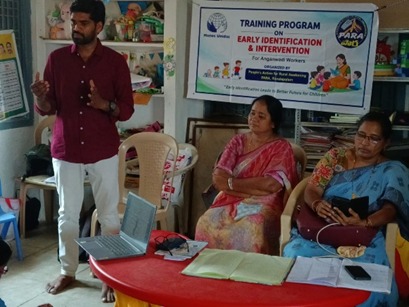
The training program on “Early Identification and Interventions to Anganwadi Workers (ICDS)” was successfully conducted on 30 March 2026 at Penikeru Anganwadi Centre in Narsipudi Sector, Alamuru Mandal. The program was organized by People’s Action for Rural Awakening (PARA) under the leadership of Badugu Mahima Rao, CBR Coordinator, with support from Manos Unidas. A total of 26 Anganwadi Teachers actively participated in the training, representing the ICDS sector of the region. The session aimed to strengthen grassroots-level capacity in addressing developmental challenges among children.
The primary objective of the training was to enhance the ability of Anganwadi Workers to identify developmental delays and disabilities at an early stage, particularly among children below three years of age. The program focused on equipping participants with practical knowledge and skills to recognize early warning signs, thereby ensuring timely intervention. Additionally, the training emphasized improving coordination between ICDS functionaries and voluntary organizations to provide comprehensive support systems for children with disabilities.
In his keynote address, Badugu Mahima Rao stressed that early identification plays a critical role in reducing the severity of disabilities and improving long-term developmental outcomes. He highlighted that Anganwadi Workers serve as the first point of contact at the community level and therefore carry significant responsibility. The session included detailed explanations of various types of disabilities, their early symptoms, and simple, practical identification methods that can be applied at the Anganwadi level. His address reinforced the importance of proactive engagement and regular monitoring of children’s growth and development.
The resource person, Badugu Subbayamma, provided an in-depth session on the support systems available for persons with disabilities. She explained various government welfare schemes, including provisions related to healthcare, inclusive education, special education services, and social security benefits such as pensions. She also elaborated on the 21 categories of disabilities recognized under the Rights of Persons with Disabilities Act, 2016, helping participants understand the legal framework. Furthermore, she guided Anganwadi Workers on how to assist families in accessing these services effectively, ensuring that eligible beneficiaries receive timely support.
The program was further strengthened by the presence of Satyaveni, ICDS Supervisor, who appreciated the initiative and noted that such training programs should be extended to all sectors. She highlighted that the session provided valuable insights and new information to the participants. She assured continued collaboration with PARA and other organizations, emphasizing that issues related to children with disabilities would be promptly addressed through coordinated efforts.
Overall, the training witnessed active engagement from all 26 participants, along with ICDS officials and representatives from PARA. The program concluded on a positive note, emphasizing the importance of early identification, timely intervention, and strong coordination among stakeholders. The training significantly enhanced the knowledge and practical skills of Anganwadi Workers, empowering them to play a more effective and proactive role in promoting inclusive child development at the community level.
Read More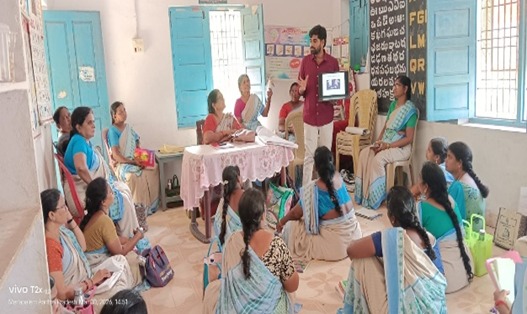
Training program on Early Identification and Interventions to Angawadi workers (ICDS)- Athreyapuram
Posted On April 1, 2026
Introduction
A training program on “Early Identification and Interventions” was organized on March 31, 2026, at the Penikeru Anganwadi Centre in Atreyapuram Mandal, covering Lolla and Merlapalem sectors. The program was conducted under the leadership of Mr. Badugu Mahimarao, CBR Coordinator of PARA (People’s Action for Rural Awakening). It was attended by 54 Anganwadi Workers in the presence of ICDS Sector Supervisors Ms. Padmavathi and Ms. Arundhati.
Objective of the Program
The primary objective of the training was to strengthen the capacity of Anganwadi Workers in identifying developmental delays and disabilities among children at an early stage. The program aimed to enhance their ability to recognize early signs and symptoms, promote timely intervention, and improve coordination between ICDS functionaries and voluntary organizations working in the field.
Key Address by the CBR Coordinator
In his address, Mr. Badugu Mahimarao emphasized the importance of early identification of disabilities, particularly before the age of three years. He explained that timely detection can significantly reduce the severity of disabilities and improve developmental outcomes in children.
He provided practical insights on different types of disabilities, their early signs and symptoms, and simple methods of identification at the Anganwadi level. He highlighted the critical role of Anganwadi Workers in identifying children with developmental delays and ensuring that they receive timely support and intervention at the grassroots level.
Session by Resource Person
The Resource Person, Ms. Badugu Subbayamma, delivered an informative session focusing on welfare schemes available for persons with disabilities. She explained various services such as special education, inclusive education, healthcare facilities, and pension schemes.
She also elaborated on the provisions and the 21 categories of disabilities recognized under the Rights of Persons with Disabilities Act, 2016. Additionally, she guided participants on how to assist families in accessing these benefits effectively and ensuring that eligible children receive appropriate support.
Remarks by ICDS Supervisors
Ms. Padmavathi, ICDS Supervisor, appreciated the initiative and noted that the training provided valuable knowledge on several topics that were previously unfamiliar to the Anganwadi Workers. She expressed confidence that participants would apply the learnings in their respective villages for early identification and support of children with disabilities.
Ms. Arundhati, ICDS Supervisor, also extended her support and encouraged continued collaboration between Anganwadi Workers and organizations like PARA and LAMP to improve service delivery and outreach.
Participation
The program witnessed active and enthusiastic participation from 54 Anganwadi Workers, along with ICDS Sector Supervisors and representatives from PARA and LAMP. The interactive nature of the sessions enabled participants to clarify their doubts and gain practical knowledge.
Conclusion
The training program concluded successfully with a strong emphasis on the importance of early identification, timely intervention, and coordinated efforts in addressing the needs of children with disabilities. The session empowered Anganwadi Workers with practical knowledge and skills, enabling them to play a proactive role in promoting inclusive and community-based child development.
Read More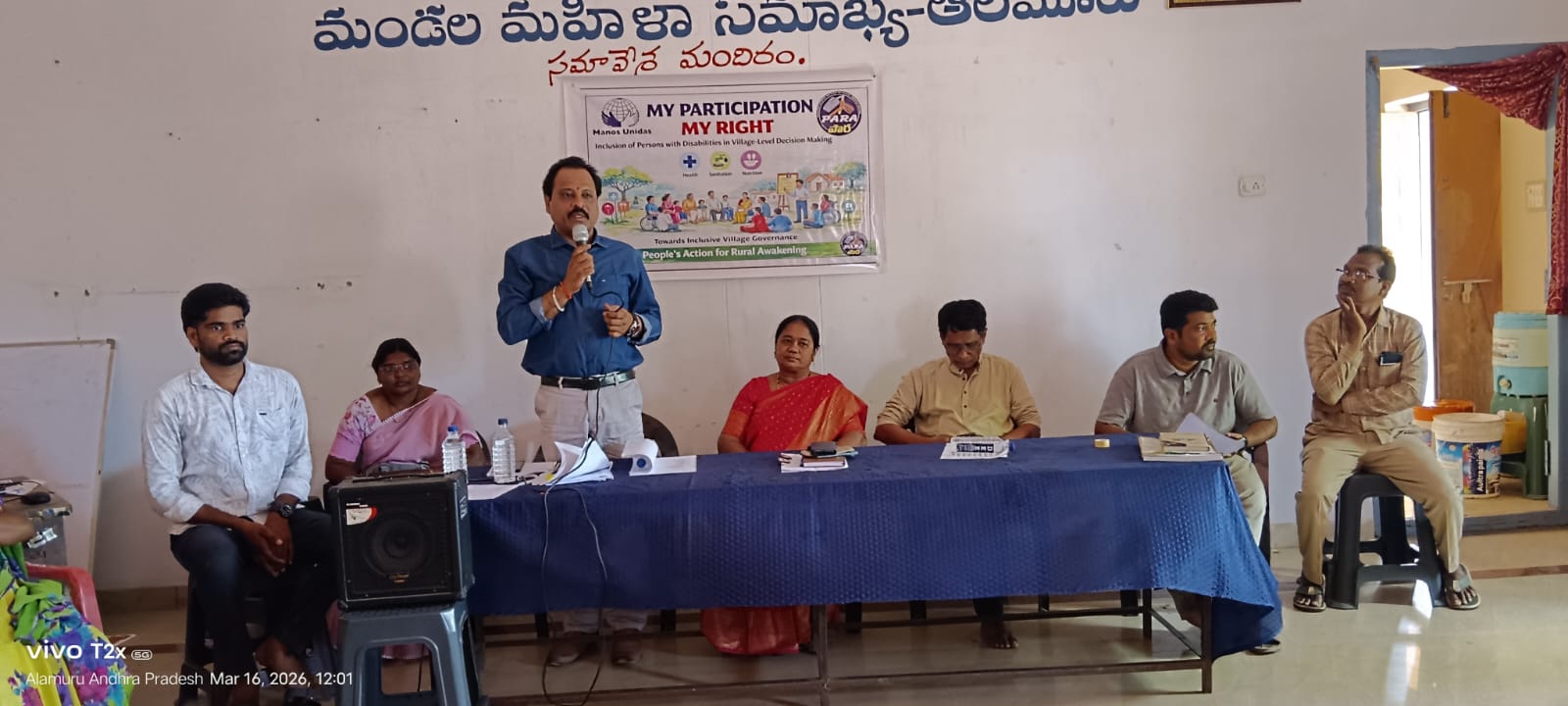
“My Participation – My Right” - Inclusion of Persons with Disabilities in Village-Level Committees
Posted On March 27, 2026
On 16 March 2026, PARA Organization organized a meaningful training and awareness program titled “My Participation – My Right” at the Alamuru Mandal Women’s Federation (VELUGU) Office, Alamuru. The program, coordinated by Mr. Badugu Mahima Rao, CBR Coordinator, focused on strengthening the inclusion and participation of persons with disabilities (PwDs) in village-level governance, particularly in committees related to health, sanitation, and nutrition.
The program brought together a total of 50 participants, of whom 42 were persons with disabilities and 8 were others, including government officials, NGO staff, and the resource person. Participants represented from 18 villages of Alamuru Mandal, making the gathering a diverse and representative platform for dialogue and collective reflection.
The program began on a reflective and rights-based note with the reading of the Preamble of the Constitution of India, reaffirming the shared commitment to equality, dignity, and justice. This set the tone for the day’s discussions, emphasizing that participation in governance is not a privilege but a right for every citizen, including persons with disabilities.
Welcoming the participants, Mr. Badugu Mahima Rao highlighted that meaningful participation of PwDs in village-level committees is essential for ensuring that their voices, needs, and priorities are included in local development planning. He stressed that inclusion is not only the responsibility of persons with disabilities but also of institutions, government systems, and society as a whole. His address created a strong foundation for the discussions that followed.
The session led by Ms. Badugu Subbayamma, resource person added depth and clarity to the program. She explained the key provisions of the Rights of Persons with Disabilities Act, 2016, focusing on social protection, access to healthcare and education, employment opportunities, and most importantly, the right to participate in governance and decision-making processes. Her interaction with participants encouraged them to move from awareness to action, motivating them to claim their rightful space in village committees with confidence.
Building on this, Fr. Thomas Pallithanam, Director of PARA Organization, emphasized the importance of collective leadership and coordination. He encouraged persons with disabilities to see themselves not as beneficiaries but as active contributors and leaders in their communities. His message reinforced the idea that inclusive development is only possible when everyone participates equally.
A significant highlight of the program was the address by the Chief Guest, Mr. Raju, Mandal Parishad Development Officer (MPDO), Alamuru. He appreciated the initiative and acknowledged the importance of ensuring inclusion in governance systems. Importantly, he assured that necessary instructions would be issued to all Panchayats in the Mandal to facilitate the participation of persons with disabilities in village-level committees. This commitment marked a crucial step toward institutionalizing inclusion at the grassroots level.
The program was not limited to speeches but created space for active engagement. Participants openly shared their experiences, challenges, and aspirations regarding their participation in village governance. Many expressed that they had previously been excluded or unaware of their rights, but the program helped them gain clarity and confidence. The presence of other dignitaries, including Fr. Simharayulu (Administrator, PARA), Ms. Durga (Block Coordinator), and Mr. Prakash (DB-Tech Representative), further strengthened the discussions and encouraged participants.
The program concluded with a collective commitment pledge, where participants affirmed their willingness to actively engage in village committees and contribute to community development. This moment reflected a strong sense of unity, self-belief, and shared responsibility among the participants.
Overall, the program was not just an awareness activity but a transformative experience that strengthened the confidence, knowledge, and motivation of persons with disabilities. It helped bridge the gap between rights and practice by connecting community members with institutional support. The assurance given by the MPDO, combined with the increased awareness among participants, indicates a positive shift toward more inclusive and participatory village governance in Alamuru Mandal.
Read More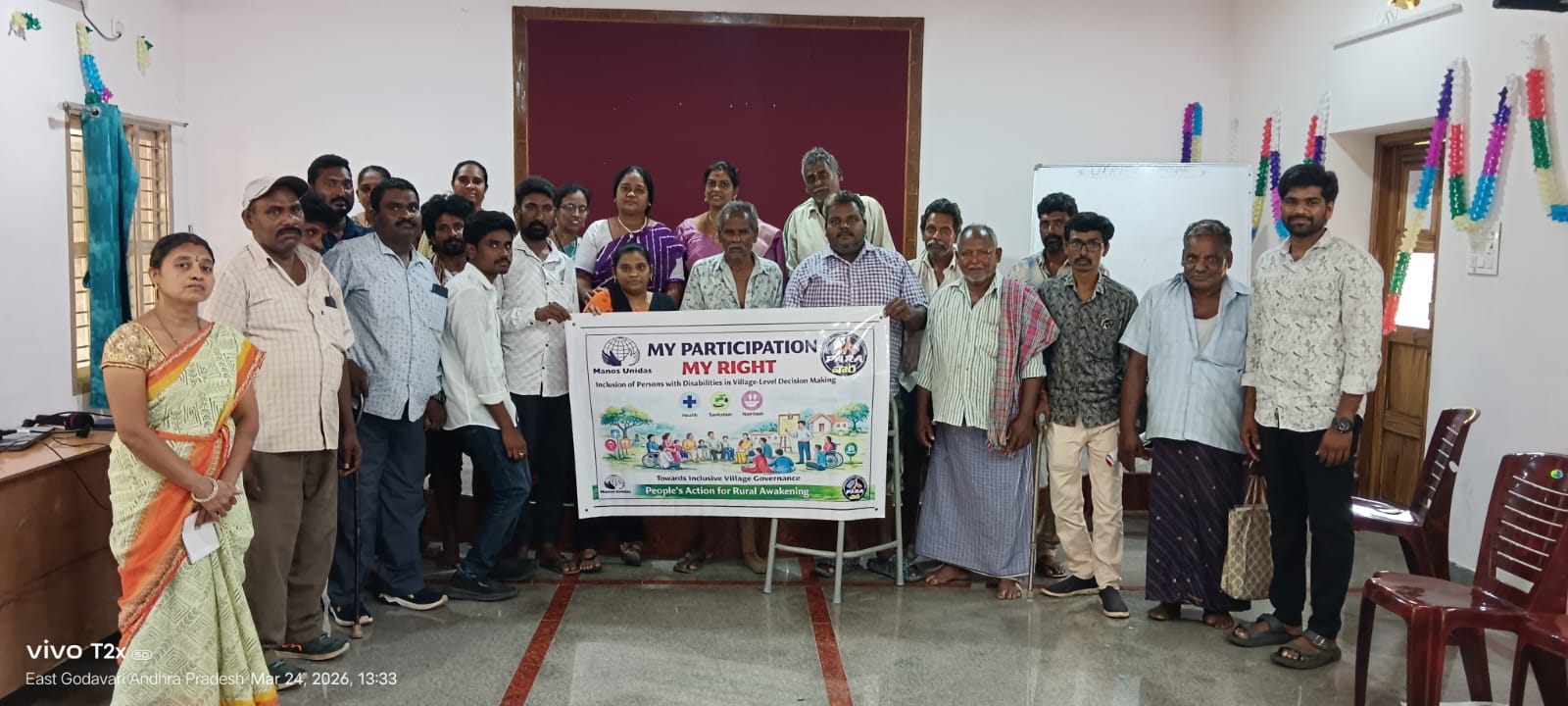
“My Participation, My Right” - Ravulapalem Mandal
Posted On March 27, 2026
A meaningful and empowering meeting under the theme “My Participation, My Right” was organized on Tuesday, 24 March 2026, at PARA, Ravulapalem. The program was facilitated by PARA under the coordination of Mr. Badugu Mahima Rao, CBR Coordinator. It aimed to promote the inclusion and active participation of persons with disabilities (PwDs) in local governance and community decision-making processes.
The meeting brought together 40 persons with disabilities from various villages across four mandals, creating a vibrant and representative platform for sharing experiences, building awareness, and strengthening collective voices. The presence of key stakeholders, including Ms. Subbayamma as the Resource Person and Ms. Kavitha, Assistant Project Officer (APO–MGNREGS), as the Honourable Guest, added depth and institutional relevance to the program.
The program began on a solemn and inspiring note with the reading of the Preamble of the Constitution of India, reaffirming the values of justice, equality, and dignity. This was followed by a motivational song rendered by Mr. Magapu Brabhakar, Block Coordinator from Athreyapuram, which energized the participants and set a positive tone for the day’s proceedings.
An important strength of this program was the groundwork laid prior to the event. The issue of participation of persons with disabilities had already been raised in the Ravulapalem Mandal Parishad General Body meeting held earlier that week. During that forum, public representatives including Sarpanches, MPTCs, ZPTCs, and the MPDO were informed about the initiative and extended their support. This prior engagement helped create an enabling environment and demonstrated growing institutional openness toward inclusion.
Addressing the gathering, Mr. Badugu Mahima Rao emphasized that participation of persons with disabilities is not merely a policy requirement but a shared social responsibility. He stressed that inclusive governance can only be achieved when persons with disabilities are actively involved in village-level committees, particularly those related to nutrition, health, and welfare. His address highlighted the need to move from passive inclusion to meaningful participation, where voices of PwDs influence decisions.
The awareness session led by Ms. Badugu Subbayamma, Advocacy Coordinator from LAMP, provided critical insights into the Rights of Persons with Disabilities Act, 2016. She explained key provisions related to education, healthcare, employment, and social entitlements, making the information accessible and relevant to participants. Importantly, she guided them on grievance redressal mechanisms, enabling them to understand not only their rights but also the processes to claim them. Her session strengthened the confidence of participants to engage with systems and demand accountability.
Further enriching the discussion, Fr. Thomas Pallithanam, Director of PARA Organization, encouraged participants to take ownership and leadership within their communities. He emphasized that strong and functional committees are essential for inclusive development and urged persons with disabilities to actively contribute to strengthening these local institutions.
A key highlight of the program was the address by the Honourable Guest, Ms. Kavitha, Assistant Project Officer (APO–MGNREGS). She provided practical information about employment opportunities available for persons with disabilities under the Rural Employment Guarantee Scheme. She explained the process of obtaining a job card and assured that employment for persons with disabilities would be taken up as a specific agenda in Field Assistants’ meetings. Her assurance that equal opportunities would be ensured without discrimination was a significant step toward improving access to livelihoods.
The program also witnessed the presence of Fr. Simharayulu, Administrator of PARA, and Mr. D.B.TET Prakash, whose participation added encouragement and institutional support to the initiative.
Throughout the meeting, participants actively engaged in discussions, sharing their challenges, aspirations, and experiences. Many expressed that such platforms are crucial for building awareness and confidence, as they often face barriers in accessing information and participating in decision-making spaces. The interactive nature of the program helped create a sense of solidarity and collective strength among them.
In conclusion, the meeting served as an important step toward strengthening inclusive governance in Ravulapalem Mandal. It not only enhanced awareness about rights and entitlements but also fostered confidence, leadership, and collective responsibility among persons with disabilities. The assurances from government representatives, combined with increased awareness and motivation among participants, indicate a positive movement toward ensuring that persons with disabilities are recognized as equal stakeholders in community development.
Read More
Training on Early Identification and Coordination of Children with Disabilities Conducted at Ubalanka PHC
Posted On March 16, 2026
A training program on “Early Identification and Coordination of Children with Disabilities” was successfully conducted on 11th March 2026 at the Primary Health Centre (PHC), Ubalanka, in Ravulapalem Block. The program was organised by Badugu Mahima Rao (CBR) with the aim of strengthening the capacity of frontline health workers in identifying developmental delays among children at an early stage and ensuring timely referral and coordination for appropriate medical and rehabilitation services.
The program witnessed the participation of 49 health workers and community representatives, including 33 ASHA workers, 8 ANMs, and 8 other participants. Their active participation reflected the growing commitment among grassroots health workers to address issues related to childhood disabilities and promote early intervention at the community level.
The training session was led by Mr. Badugu Mahimarao, CBR Coordinator, who emphasized the importance of early identification of developmental delays in children, particularly those below three years of age. In his address, he explained that early detection plays a crucial role in reducing the severity of disabilities and improving the overall development and quality of life of children through timely medical care and rehabilitation support.
He highlighted the significant role played by frontline health workers such as ASHA workers and ANMs, who maintain close contact with families in villages. Because of their regular visits and interactions with mothers and children, these health workers are in a unique position to observe developmental milestones and identify early warning signs of disabilities. He encouraged them to remain vigilant and guide families toward appropriate health services whenever developmental concerns are noticed.
The training focused on practical and field-oriented learning. Participants were guided on understanding developmental milestones in early childhood, identifying early signs of developmental delays, and referring suspected cases to appropriate medical specialists and diagnostic centres for further evaluation and treatment. The session aimed to equip health workers with the necessary knowledge and confidence to act promptly when they encounter developmental concerns during their community visits.
An important session was delivered by Ms. Badugu Subbayamma, State Advocacy Coordinator (LAMP), who spoke about the rights, entitlements, pensions, and concessions available for persons with disabilities. She explained various government welfare schemes and support systems designed to assist persons with disabilities and their families. She also stressed the importance of ensuring that persons with disabilities are actively included in village-level committees and community decision-making processes, emphasizing that building an inclusive society requires the collective effort of officials, health workers, and community members.
The program was also attended by Mr. Chittibabu, Supervisor of Ubalanka PHC, along with other health staff members. They appreciated the initiative taken to strengthen community-based systems for the early identification and referral of children with disabilities, noting that such training programs help improve coordination between community workers and healthcare institutions.
Overall, the training program proved to be highly beneficial in enhancing the knowledge, awareness, and practical skills of frontline health workers regarding early identification and referral mechanisms. By strengthening the capacity of grassroots health workers, the program contributes to the broader goal of early intervention, inclusive development, and improved well-being for children with disabilities in the community.
Read More